






















Dedicated Software Development Teams

AI + Global Talent = Smarter Operations

eSparkBiz assembles high-performing dedicated software teams that combine deep engineering expertise with autonomous AI tooling capabilities to deliver robust digital products faster. Our teams integrate seamlessly with your roadmap, governance model, and release objectives to improve execution certainty and accelerate business growth.

48-72 hrs
Developer Onboarding
400+
Engineers
15+
Years of experience
98%
Client retention
AI-Powered Engineering Teams
  • Time-Zone Aligned
  • Agile & Sprint Ready
  • NDA Protected Workflow
  • Dedicated Project Manager
Trusted by SaaS Startups, Enterprises & Digital Product Companies
Lred
TOSHIBA Logo
Trane
Montana
Radefy
Ethos
Goals
Miova
Samata Health
Atlantis Dubai
Cision
Background Image

About eSparkBiz

Why Hire Dedicated Software Development Team from eSparkBiz?

ES offers dedicated development teams to help businesses achieve their technology goals efficiently.

Strategic Dedicated Software Teams that scale with your Product and Priorities.

At eSparkBiz, we build Dedicated Software Development Teams that function as a seamless extension of your organization. We align senior engineers, architects and AI-enabled delivery practices with your product goals to accelerate releases at scale.

The software development outsourcing market is projected to reach $618.38 billion in 2026, reflecting sustained enterprise demand for dedicated teams. Our dedicated software teams apply proven governance and engineering discipline to deliver predictable outcomes.

What makes eSparkBiz your strategic engineering partner?

  • Handpicked Engineers aligned with your Product Vision
  • On-Demand Team Scaling without Recruitment Delays
  • Executive-Level Visibility across Delivery and Governance
  • Consistent Code Quality with Established Engineering Standards

Who Can Benefit

Dedicated Teams Tailored for Every Stage of Growth

We provide Dedicated Software Development Teams that accelerate product delivery, strengthen engineering capacity and build scalable software aligned with your strategic goals.

01
Emerging Startups

Emerging Startups

Our dedicated teams help startups validate ideas, launch MVPs faster, and build scalable technology foundations that support rapid iteration, efficient spending, and stronger investor confidence.

02
Growing SMBs

Growing SMBs

We provide experienced engineers who modernize systems, accelerate feature delivery, and build scalable applications that improve operational efficiency and support sustained business growth.

03
Global Enterprises

Global Enterprises

Our enterprise-ready dedicated teams strengthen governance, support complex transformation programs, and deliver secure high-performing software that aligns with global standards and strategic objectives.

Transform your Plans into Dedicated Team Outcomes
cta bg

Review Proven Work that delivers Measurable Outcomes and reflects Our Engineering Excellence across complex high-impact initiatives.

End-to-end Dedicated Software Development Services

What you can achieve with Dedicated Software Development Services

We provide dedicated software development services spanning strategy, engineering, modernization, and support, enabling businesses to build scalable solutions with speed, flexibility, and delivery confidence.
Custom Team Setup
Custom Team Setup

Custom Team Setup

We assemble dedicated software teams tailored to your technical requirements, delivery goals, and preferred collaboration model, ensuring rapid onboarding, seamless integration, and long-term delivery continuity.

Our team provides:

  • Role-Based Selection
  • Rapid Team Onboarding
  • Flexible Team Scaling
  • Skills-Matched Experts
  • Delivery Model Alignment
Full-Cycle Software Development

Full-Cycle Software Development

Our dedicated teams manage the complete software lifecycle from discovery and architecture to development, testing, deployment and optimization ensuring predictable delivery high quality and long-term.

We deliver end-to-end:

  • Requirements Analysis
  • Solution Architecture
  • Agile Development
  • Quality Testing
  • Production Deployment
Product Engineering

Product Engineering

We transform product concepts into scalable digital product solutions through structured engineering iterative releases and continuous improvement helping you accelerate innovation enhance user experiences and drive.

Our engineers build:

  • MVP Development
  • Product Scaling
  • Feature Enhancement
  • Performance Optimization
  • Release Management
Technology Consulting

Technology Consulting

Our consultants assess your technology landscape define actionable roadmaps and recommend scalable architectures that reduce technical risk optimize investments and support informed business decisions confidently.

We guide decisions:

  • Architecture Assessment
  • Technology Selection
  • Roadmap Planning
  • Risk Mitigation
  • Cost Optimization
Web App Development

Web App Development

We build secure responsive web applications engineered for performance usability and seamless integrations enabling businesses to deliver engaging digital experiences and scale efficiently across platforms.

Our developers create:

  • Responsive Interfaces
  • Secure Architectures
  • API Integration
  • Performance Optimization
  • Scalable Applications
Mobile App Development

Mobile App Development

Our mobile development teams create intuitive iOS and Android applications that deliver reliable performance, seamless functionality and engaging user experiences across devices and operating environments.

We engineer mobility:

  • Native Development
  • Cross-Platform Apps
  • Offline Capability
  • Push Notifications
  • App Store Deployment
Software Integration

Software Integration

We connect applications platforms and data sources to streamline workflows eliminate silos and ensure secure consistent information exchange across your technology ecosystem without operational disruption.

Our specialists connect:

  • API Integration
  • Data Synchronization
  • Workflow Automation
  • System Interoperability
  • Secure Connectivity
Application Modernization

Application Modernization

Our teams modernize legacy applications to improve performance, strengthen security, enhance scalability and align systems with evolving business and technology requirements for sustained competitiveness.

We modernize systems:

  • Legacy Assessment
  • Architecture Refactoring
  • Cloud Migration
  • UI Modernization
  • Performance Improvement
Quality Assurance

Quality Assurance

We implement rigorous testing processes that identify defects early validate functionality and ensure stable reliable software releases with reduced risk, improved quality and greater deployment.

Our QA ensures:

  • Test Automation
  • Functional Testing
  • Regression Testing
  • Performance Testing
  • Security Validation
DevOps Enablement

DevOps Enablement

Our DevOps specialists automate delivery pipelines, optimize infrastructure and strengthen operational reliability enabling faster releases, improved development efficiency and scalable continuous delivery across environments.

We streamline delivery:

  • CI/CD Automation
  • Infrastructure Management
  • Environment Standardization
  • Monitoring Setup
  • Release Optimization
Cybersecurity Consulting

Cybersecurity Consulting

We provide dedicated cybersecurity services that safeguard applications, infrastructure, and data through proactive threat prevention, compliance alignment, and resilient defense mechanisms.

Our security team ensures:

  • Threat Detection Systems
  • Vulnerability Assessment Scans
  • Secure Code Practices
  • Identity Access Controls
  • Incident Response Management
Support and Maintenance

Support and Maintenance

Our support teams proactively monitor applications, resolve issues and deliver ongoing enhancements to sustain performance security and business continuity across evolving operational and user demands.

We maintain stability:

  • Proactive Monitoring
  • Incident Resolution
  • Performance Tuning
  • Security Updates
  • Continuous Improvements
Achieve your Ideal Outcomes with our Dedicated Software Team Efforts
bg wave vector bg wave vector

Why Choose eSparkBiz

Why Partner with eSparkBiz?

Engage eSparkBiz possessing Dedicated Software team with proven expertise, flexible scaling, transparent governance, and enterprise-grade delivery aligned to your business goals.

15+ Years of Expertise 15+ Years of Expertise
100% NDA-protected Contract 100% NDA-protected Contract
95% Client Retention Rate 95% Client Retention Rate
Access to 45+ Technologies Access to 45+ Technologies

Certification
eSparkBiz validates service management excellence through ISO 20000-1:2018 certification
Delivering Standardized Software Solutions
eSparkBiz ensures customer-focused delivery through ISO 9001:2015 certified practices
Delivering Standardized Software Solutions
eSparkBiz safeguards client data through ISO 27001:2022 certified security controls
Delivering Standardized Software Solutions
eSparkBiz showcases cloud excellence with the official AWS Select Tier Partnership
Delivering Standardized Software Solutions
Trusted AICPA SOC 2 seal validating eSparkBiz secure organizational control reporting practices
Delivering Standardized Software Solutions
eSparkBiz achieved CMMI Level 3 certification ensuring standardized quality-driven development processes.
Delivering Standardized Software Solutions
Official PSM II accreditation highlighting eSparkBiz commitment toward agile project management excellence.
Delivering Standardized Software Solutions

Next-gen Expertise

Dedicated Teams Driving Next-Gen Technology Innovation

We engineer high-performing software teams skilled in emerging technologies, solving complex challenges, accelerating delivery, and enabling enterprise digital transformation outcomes.

1 / 10
Artificial Intelligence

Artificial Intelligence

Our dedicated software development teams design AI-powered systems that automate decisions, enhance user experiences, and optimize business operations using scalable architectures aligned with enterprise-grade performance and security standards.

Machine Learning

Machine Learning

We deploy dedicated engineering teams that build predictive machine learning models, enabling data-driven insights, real-time forecasting, and adaptive systems that continuously improve accuracy, efficiency, and business decision-making outcomes.

Internet of Things

Internet of Things

Our dedicated teams develop IoT ecosystems that connect devices, enable real-time monitoring, and ensure secure data exchange, helping enterprises improve operational visibility, automation, and intelligent infrastructure management.

Cloud Computing

Cloud Computing

We provide dedicated cloud engineers who design scalable cloud-native architectures, optimize infrastructure performance, and ensure high availability systems that support agile deployment, cost efficiency, and enterprise-grade reliability.

Blockchain

Blockchain

Our dedicated blockchain teams build decentralized applications, secure transaction systems, and smart contract solutions that ensure transparency, traceability, and trust across complex multi-party business ecosystems.

AR/VR

AR/VR

We create immersive AR and VR solutions through dedicated teams that enhance training, simulation, and customer engagement experiences with interactive, high-performance, and visually rich digital environments.

RPA

RPA

Our dedicated RPA engineers automate repetitive business processes, reduce operational overhead, and improve workflow efficiency through intelligent bots designed for accuracy, scalability, and enterprise process optimization.

Computer Vision

Computer Vision

We build dedicated computer vision teams that develop image recognition and analysis systems enabling automation, enhanced security, and real-time visual intelligence across industrial and commercial applications.

NLP

NLP

Our dedicated NLP teams develop language intelligence solutions that enable chatbots, sentiment analysis, and contextual understanding systems for improved customer engagement and intelligent communication workflows.

Big Data

Big Data

We deliver dedicated big data engineering teams that process large-scale datasets, enable real-time analytics, and generate actionable insights that support strategic decision-making and enterprise growth.

Turn Your Vision into Futuristic Reality with Our Advanced Dedicated Software Team Expertise
cta bg

Industries We Serve

Dedicated Software Teams Solving Every Industry-Specific Challenge

We align dedicated engineering teams with 20+ industry needs, delivering scalable compliant solutions that improve operations, efficiency, and business outcomes.

1 / 12

Healthcare

Healthcare

We support healthcare organizations by building secure, compliant systems that improve clinical workflows, enhance patient care delivery, and strengthen interoperability across digital health ecosystems.

Healthcare Systems Engineering Focus:

  • HIPAA aligned secure platforms
  • Clinical workflow optimization systems
  • Patient data integrity solutions
  • Interoperable health architectures

Banking & Finance

Banking & Finance

Our engineering teams enable financial institutions with resilient systems that strengthen regulatory compliance, reduce fraud exposure, and improve transaction reliability at enterprise scale.

Financial Technology Engineering Expertise:

  • Regulatory compliant platforms
  • Fraud detection frameworks
  • High-volume transaction systems
  • Risk analytics engines

Real Estate

Real Estate

We help real estate businesses streamline operations through platforms that optimize property management, improve listing accuracy, and enhance client engagement across digital channels.

Property Tech Engineering Enablement:

  • Listing automation systems
  • CRM-driven workflows
  • Property lifecycle platforms
  • Lead management tools

Retail

Retail

We empower retail enterprises with scalable systems that unify omnichannel operations, enhance customer intelligence, and improve inventory and sales performance efficiency.

Retail Digital Engineering Capability:

  • Omnichannel commerce systems
  • Inventory optimization engines
  • Customer analytics platforms
  • Sales automation workflows

Manufacturing

Manufacturing

Our teams enable manufacturing enterprises with intelligent systems that improve production visibility, reduce downtime, and enhance predictive operational efficiency across the value chain.

Industrial Engineering Transformation Support:

  • Smart production monitoring
  • Predictive maintenance systems
  • Process automation platforms
  • Supply chain optimization

Logistics

Logistics

We build logistics-focused systems that improve route efficiency, enhance shipment tracking visibility, and strengthen end-to-end supply chain coordination.

Logistics Optimization Engineering Expertise:

  • Route optimization systems
  • Fleet tracking platforms
  • Warehouse automation tools
  • Supply visibility solutions

Telecommunication

Telecommunication

Our teams support telecom providers with scalable systems that enhance network performance, automate operations, and improve infrastructure reliability across large-scale environments.

Telecom Systems Engineering Support:

  • Network optimization platforms
  • OSS/BSS automation
  • Real-time monitoring systems
  • Scalable telecom architecture

Travel

Travel

We enable travel businesses with platforms that simplify booking experiences, personalize customer journeys, and integrate real-time travel data intelligence.

Travel Platform Engineering Solutions:

  • Booking management systems
  • Personalization engines
  • Itinerary optimization tools
  • API integration layers

Hospitality

Hospitality

Our teams help hospitality enterprises enhance guest experiences through systems that streamline bookings, optimize operations, and improve service delivery efficiency.

Hospitality Engineering Experience Focus:

  • Reservation management systems
  • Guest experience platforms
  • Operations automation tools
  • Service optimization systems

Education

Education

We enable education providers with scalable digital learning platforms that improve engagement, simplify administration, and enhance academic delivery outcomes.

EdTech Engineering Enablement:

  • Learning management systems
  • Virtual classroom platforms
  • Student analytics tools
  • Content delivery systems

Automotive

Automotive

Our engineering teams support automotive enterprises with connected systems that improve mobility intelligence, predictive maintenance, and vehicle performance monitoring.

Automotive Digital Engineering Assistance:

  • Connected vehicle systems
  • Telematics platforms
  • Predictive maintenance tools
  • Mobility analytics systems

Fitness

Fitness

We empower fitness businesses with platforms that track performance, personalize training, and improve user engagement across digital health ecosystems.

Core Fitness Technology Engineering:

  • Workout tracking systems
  • Health analytics platforms
  • Training personalization tools
  • Engagement dashboards
squre vector

Engagement Models Comparison

Modern Engagement Models: Build vs Extend vs Outsource

We assist businesses in identifying the optimal engagement model for streamlined delivery, reduced complexity, and improved development outcomes.

Criteria/Model Dedicated Development Team Team Augmentation Full Project Outsourcing
Use Case Scenarios

Ideal for long-term product development requiring consistent engineering ownership and domain expertise within evolving roadmaps

Best for filling specific skill gaps within existing teams for short-term project execution support needs

When entire project delivery is required without internal involvement, ownership transferred to external development vendor

Project Use Examples

Used for continuous SaaS platforms requiring ongoing feature development, scaling, and long-term product evolution cycles

Used when e-commerce companies require additional developers during peak traffic or feature release cycles periods

Used for building complete applications like enterprise systems when no internal technical team exists internally

Cost Impact Analysis

Higher initial investment but optimized long-term cost efficiency through stable team utilization and knowledge retention

Flexible cost model based on resource usage, suitable for temporary scaling and budget-controlled development phases

Lower upfront cost but potential higher long-term expenses due to change requests and dependency risks

Risk Responsibility Model

Shared responsibility model where vendor manages execution while client retains strategic control over priorities governance

Client holds primary responsibility while augmented engineers integrate into existing workflows and delivery processes structure

Vendor assumes full delivery responsibility including execution risks, quality assurance, and final product ownership transfer

Collaboration Integration Depth

Deep integration with client teams enabling aligned workflows, shared communication channels, and continuous collaboration flow

Partial integration requiring onboarding into client environment with dependency on existing team structures limited integration

Minimal collaboration with external vendor managing entire development lifecycle independently from client operations handover model

Delivery Management Effort

Moderate onboarding time required to align teams, processes, tools, and domain-specific business requirements setup phase

Fast onboarding enabling immediate resource allocation into existing teams with minimal setup delays integration speed

Longer kickoff phase involving requirement gathering, documentation, planning, and vendor alignment before execution start delay

Scalability Flexibility Level

Highly scalable teams allowing flexible expansion or reduction based on evolving product requirements business needs

Moderate flexibility enabling short-term scaling of specific skill sets depending on project demands resource allocation

Limited flexibility once scope is defined, with changes requiring formal change request processes control constraints

Cost Estimate

Cost Estimate for Dedicated Software Development Team

We analyze key cost drivers influencing dedicated team hiring including expertise, location, compliance, structure, and engagement factors affecting budgets.
Team Size Composition

Team Size Composition

Fact Figures: Small Teams cost $5K-$18K/month, scaling up to $90K+ monthly
We ensure flexible team sizing delivers cost efficiency and transparent pricing aligned with project requirements and business goals.

Features:

  • Scalable team allocation model
  • Dynamic resource planning approach
  • Cost optimized staffing model
  • On demand team expansion
  • Efficient workforce distribution system
  • Budget aligned composition strategy
Skill Level Expertise

Skill Level Expertise

Fact Figures: Junior Developers cost $12-$40/hr, while Senior Specialists reach $50-$120/hr
Our skilled experts deliver tiered pricing based on expertise ensuring optimal balance between cost efficiency and technical excellence.

Features:

  • Junior developer cost efficiency
  • Mid level expertise scaling
  • Senior architect premium delivery
  • Specialized skill set pricing
  • Certified professional resource pool
  • Performance driven expert selection
Team Location Impact

Team Location Impact

Fact Figures: India-based developers cost $12-$50/hr, while $80-$150/hr in US and Western Europe markets
We leverage global location advantages to optimize development costs while maintaining quality standards and seamless communication across teams.

Features:

  • Offshore cost advantage savings
  • Nearshore collaboration efficiency gains
  • Onsite premium resource allocation
  • Time zone alignment benefits
  • Reduced operational overhead costs
  • Global talent access network
Legal Compliance Costs

Legal Compliance Costs

Fact Figures: Adds 10% to 20% overhead depending on industry standards and enterprise security needs
Our compliance framework ensures adherence to legal standards reducing risks and unexpected costs in dedicated team engagements projects

Features:

  • Regulatory adherence assurance process
  • Contract compliance management system
  • Data protection legal alignment
  • Risk mitigation governance structure
  • Audit ready documentation support
  • Policy driven operational compliance
Project Complexity Scope

Project Complexity Scope

Fact Figures: Simple MVPs cost $5K-$30K and Advanced AI Systems may exceed $50K-$150K+

We manage complex project scopes with adaptive pricing models ensuring efficiency, clarity and predictable delivery outcomes consistently successfully

Features:

  • Modular architecture cost planning
  • Requirement driven estimation model
  • Scalable solution complexity handling
  • Agile scope management system
  • Milestone based delivery control
  • Dynamic workload distribution method
Engagement Model Duration

Engagement Model Duration

Fact Figures: Engage Dedicated Teams at $5K–$45K+/month depending on duration and contract stability

Our engagement models offer flexible duration options enabling cost optimization and predictable budgeting for long term projects successfully

Features:

  • Short term engagement flexibility
  • Long term cost efficiency
  • Dedicated resource continuity assurance
  • Contract based pricing clarity
  • Sprint based billing cycles
  • Subscription model optimization structure
Technology Stack Requirements

Technology Stack Requirements

Fact Figures: Pricing varies by 15%–35% based on specialization demand
We align pricing with technology stack complexity ensuring efficient resource allocation and optimized development performance across platforms seamlessly

Features:

  • Multi stack expertise support
  • Advanced framework integration costs
  • Legacy system modernization pricing
  • Cloud native stack optimization
  • Cross platform development efficiency
  • Tooling ecosystem alignment strategy
Infrastructure Support Needs

Infrastructure Support Needs

Fact Figures: Adds 20% to 40% to total development engagement budget
Our infrastructure support ensures scalable environments robust security and seamless operations reducing downtime and maintenance overhead effectively consistently

Features:

  • Cloud infrastructure management support
  • DevOps pipeline optimization services
  • Server maintenance cost control
  • Monitoring system reliability assurance
  • Security infrastructure compliance setup
  • Disaster recovery planning execution
Partner with Us to Build Cost-efficient & AI-proficient Dedicated Software Teams
bg wave vector bg wave vector

Best Practices

Structured Delivery Practices for Reliable Dedicated Software Team Execution

We apply structured project governance practices that ensure transparency, control, and consistent delivery outcomes across complex software initiatives and evolving business requirements.

Talent Allocation

Talent Allocation

We identify and assign specialists whose technical expertise, domain experience, and seniority align precisely with your product goals and delivery requirements.

Delivery Collaboration

Delivery Collaboration

Our teams establish clear communication rhythms, collaboration protocols, and decision-making channels to ensure alignment across stakeholders, engineers, and leadership.

Executive Reporting

Executive Reporting

We provide structured reporting with actionable insights covering sprint progress, delivery milestones, risks, and budget visibility.

Success Metrics

Success Metrics

Our governance model tracks KPIs measuring velocity, quality, predictability, and business impact throughout the engagement.

Change Control

Change Control

We manage evolving priorities through structured impact assessment, ensuring changes are implemented efficiently without disrupting delivery momentum or budget discipline.

Quality Assurance

Quality Assurance

Our teams embed testing, reviews, and quality checkpoints throughout the development lifecycle to maintain consistently high engineering standards.

Security Oversight

Security Oversight

We enforce robust security controls protecting source code, infrastructure, confidential data, and intellectual property across every engagement.

Risk Management

Risk Management

Our governance framework identifies, monitors, and mitigates delivery, technical, and operational risks before they affect project outcomes.

Knowledge Management

Knowledge Management

We document architecture, decisions, and operational insights to preserve institutional knowledge and support long-term continuity.

Project Documentation

Project Documentation

Our teams maintain comprehensive technical and delivery documentation that ensures transparency, traceability, and efficient onboarding.

Ensure Reliable Execution with Our Structured Delivery Practices
bg wave vector bg wave vector

Detailed Guide

Dedicated Software Development Team: The Complete 2026 Guide

A dedicated software development team is a group of remote professionals hired exclusively for your project managed by a vendor while you retain full control over direction and delivery.

What is a Dedicated Software Development Team?
  • What is a Dedicated Software Development Team?
  • How Does the Dedicated Team Model Work?
  • Inside a Dedicated Development Team: Roles That Actually Matter
  • Dedicated Team Model: What You Gain and Where It Falls Short
  • Dedicated Team vs. Fixed Price / Project Based Outsourcing
  • Dedicated Team vs. In-House Development
  • Market Growth
  • When Should You Hire a Dedicated Development Team?
  • Real-World Examples: Companies That Used Dedicated Teams
  • How to Build & Hire a Dedicated Software Development Team
  • How to Manage a Dedicated Development Team Effectively
  • Where to Hire a Dedicated Development Team: Top Regions Compared
  • Conclusion

What is a Dedicated Software Development Team?

A dedicated software development team is an external group of engineers, designers & QA specialists assigned to your product with no divided attention nor shared capacity with other clients. Set direction, and own every product decision. The partner handles recruitment, contracts, payroll and retention.

This differs from general outsourcing in one critical way, Integration. A traditional service provider receives a brief, and delivers something. A dedicated team inlines into your workflows attends your sprint ceremonies & functions as direct extension of your engineering organisation not on your payroll.

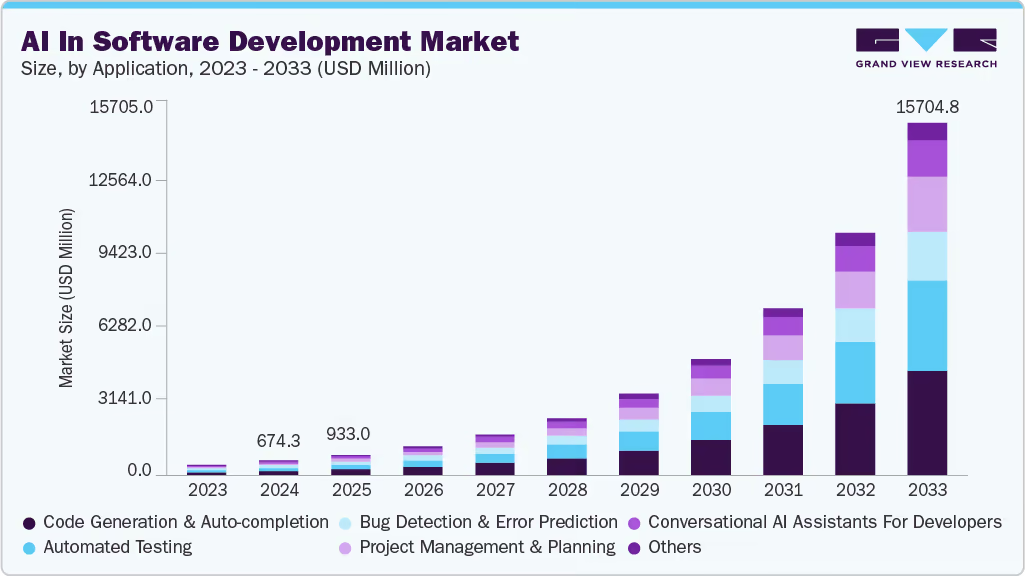
The market backs this shift as global AI in the software development market is projected to reach $15,704.8 million by 2033. Companies treating dedicated teams as strategic engineering layer are ahead of a curve.

How Does the Dedicated Team Model Work?

The model runs on three distinct layers each with a clear owner.

Client layer direction. You define what gets built in, what order and to what standard. Sprint goals, feature prioritisation, architecture decisions & a product strategy, All sit with you.

Team layer execution. The engineers, designers and QA specialists write the code, ship the features and report progress directly to you. They attend your standups, use your tools and follow your development process.

Vendor layer operations. The vendor handles everything that keeps the team functional but would distract you from sourcing the candidates, negotiating salaries, managing benefits, providing office space or remote infrastructure & replacing anyone who leaves.

The typical onboarding sequence

  1. You share project requirements, tech stack and team size with the vendor
  2. Vendor screens and presents candidate profiles in 1-3 weeks
  3. You interview and select team members
  4. Contracts are signed tooling access & workflows are established
  5. Team completes a 1 to 2 week onboarding sprint
  6. Full delivery cadence begins usually between week 4 to 6 from the initial brief

Communication runs on regular cadence, daily async updates, weekly syncs with your internal stakeholders and sprint reviews every 1-2 weeks. The vendor sits in the background available if a team member needs replacing, or a payroll issue arises, invisible otherwise.

Inside a Dedicated Development Team: Roles That Actually Matter

No two dedicated teams look identical. Structure follows the project, A fintech platform needs different coverage than a consumer mobile app. That said most teams share a common backbone.

The demand for these roles is outpacing local supply. The U.S. Bureau of Labor Statistics projects around 129,200 annual openings for software developers, QA analysts & testers each year through the decade a gap dedicated team vendors are built to fill.

Project Manager

Owns sprint planning, stakeholder communication & milestone tracking. Acts as the daily bridge between your business decisions, and the team’s technical execution. Without a strong PM, and distributed teams drift.

Frontend Developer

Builds the interfaces users interact with layouts, interactions, performance and cross browser consistency. Frontend scope should be defined before hiring React, Vue, Angular and Mobile specific frameworks require different profiles.

QA Engineer

Manages APIs, databases, server logic & application security. Backend complexity scales sharply with a data volume, and integration requirements. Distinguish early between engineers who build greenfield systems and those who extend the existing architectures.

Full Stack Developer

Covers both frontend & backend layers. Useful for early stage products where a smaller team needs broad coverage less effective at scale, Where depth matters more than the breadth.

QA Engineer

Responsible for an entire software testing cycle automated test suites, manual exploratory testing, bug documentation and regression coverage. QA embedded from the sprint one catches issues, before they compound.

UI/UX Designer

A UX/UI designer does more than make screens look good. From the research and prototypes to maintaining the design system; Their work directly shapes how users experience, and adopt the product.

Specialist Roles (Project Dependent)

Role When You Need Them
DevOps / Cloud Engineer CI/CD pipelines, cloud infra, deployment automation
AI / ML Engineer Intelligent features, data models, predictive systems
Solution Architect Large scale systems, legacy migration, complex integrations
Business Analyst Enterprise environments with complex requirement translation
Security Specialist Compliance heavy industries: fintech, health, legal

Team Sizing

Most projects need a minimum of 3-4 people to function as a genuine dedicated team: One PM, and two engineers and one QA. Smaller than that and you have contractors not a team.

For seniority distribution a 30% junior / 40% mid / 30% senior split is standard benchmark. This ratio keeps knowledge flowing downward, controls cost without sacrificing output quality & gives the team enough senior judgment to catch the architectural mistakes early.

Responsibility Split

Area Client Owns Vendor Owns
Product direction
Sprint priorities
Code quality standards
Recruitment & vetting
Payroll & benefits
Equipment & infra
Talent replacement

Did You Know?

Nearly two thirds of technology hiring managers say finding the skilled professionals is harder today than it was a year ago with 65% reporting increased difficulty in sourcing qualified talent in an increasingly competitive hiring market.

Dedicated Team Model: What You Gain and Where It Falls Short

No model is universally right. Here is what the dedicated team approach genuinely delivers and where it falls short.

Pros

  1. Faster access to senior talent. Hiring senior engineers locally takes 3-6 months. A vendor with an established Eastern Europe, or LATAM network delivers the same profile in weeks.
  2. You stop paying for vacancies. Instead of losing months to hiring delays, A dedicated model helps teams scale in a matter of weeks.
  3. Global expertise, not local lottery. ML engineers, DevOps architects, FinTech specialists, these profiles cluster globally not locally. The dedicated model expands your hiring radius from a city to a continent.
  4. Capacity that moves with your roadmap. Add backend engineer for the new sprint. Release them when a work ships. In house teams carry a fixed headcount, regardless of workload. Dedicated teams do not.
  5. Admin never touches your desk. They handle payroll, taxes, benefits, equipment and compliance; While your team focuses purely on the delivery.
  6. Knowledge compounds, not resets. A team that has been working in your codebase for over 18 months sees things new contractors simply cannot. They understand the architecture, catch problems faster & help prevent the costly mistakes before they happen.
  7. Follow-the-sun adds real hours. A significantly offset time zone extends your productive development day. For time sensitive release cycles, that is genuine capacity gain not just a cost arbitrage.

Cons

  1. Real time collaboration requires scheduling. A San Francisco to Warsaw setup leaves a very little shared working time. Even simple real time decisions need planning. It is manageable when teams communicate asynchronously well but that only works with a strong discipline.
  2. The model rewards engaged clients only. You define priorities, review work & make product calls. Teams treated like a black box vendors consistently underdeliver. Direction is your job not the vendor’s.
  3. Single role swaps are clunky. Need one React developer for 6 weeks? A Staff augmentation is faster, and lighter. Dedicated teams are built for a sustained delivery not short surgical additions.
  4. Weak contracts compound over time. No explicit IP clause, vague SLAs or missing notice periods, each one shifts leverage toward the vendor. Fix the contract before the relationship starts.
  5. First sprint carries alignment friction. Communication styles, workflow preferences and cultural context take 2-4 weeks to synchronise. Teams that absorb that friction consistently outperform those that do not.

These two models solve fundamentally different problems. Conflating them leads to the wrong hire.

Fixed price outsourcing works like a contract job. You define the scope upfront, agree on a price & deadline and the vendor delivers. You get what was specified. Changes cost extra. The vendor owns the delivery process. You see the output, not the work.

The dedicated team model is an ongoing relationship. You direct the work sprint by sprint. The scope can shift. Priorities can change. The team adapts because they are embedded in your process not executing a pre-agreed specification from a distance.

Criteria Dedicated Team Fixed-Price Outsourcing
Scope flexibility High evolves with product Low locked at contract
Client control over delivery Full Minimal
Best for Ongoing products, evolving roadmaps Defined, bounded projects
Risk type Scope drift if priorities are unclear Change order cost creep
Team visibility You know every team member Often opaque
Timeline Continuous Fixed end date

When fixed price wins: You need a specific, bounded deliverable, a data migration, a one off integration, a clearly defined feature with no expected follow on work. The scope will not change. You do not need ongoing influence over how it gets built.

When dedicated wins: You are building a product with a roadmap. Requirements will evolve. Speed and quality of ongoing delivery matter more than hitting a single delivery date.

🤖AI Forecast

Gartner predicts that by 2030, 70% of large organizations will use AI based supply chain forecasting to anticipate future demand helping businesses improve planning accuracy, reduce disruptions and respond more effectively to market changes.

Dedicated Team vs. In-House Development

The most common strategic question for scaling companies: Build internally or partner externally?

The answer is rarely binary. Most companies that do this well maintain a core internal team for architecture decisions, and product strategy and use a dedicated external team to execute the roadmap at speed. The distinction is not about trust, It is about what each model structurally enables.

Criteria Dedicated Team In House Team
Time to first sprint 2-6 weeks 3-6 months (hiring cycle)
Talent pool Global Local market only
Admin burden Vendor managed Fully company managed
Scaling up Weeks Months of recruitment
Scaling down Notice period (typically 30-60 days) Redundancy process & legal exposure
Control over direction Full Full

The control myth: Many executives assume in-house equals more control. It does not. Control over product direction is identical in both models you set the priorities, you review the work, you own the decisions. What in-house gives you is control over employment and that comes with its own constraints.

When in-house still wins:

  • The team will work on your core proprietary IP that cannot leave the building
  • Your industry requires physical presence for regulatory or security reasons
  • The role is too senior and too central to trust to any external arrangement
  • You are building engineering culture intentionally and team composition is part of that strategy

For everything else feature development, QA, design, DevOps the dedicated model competes on every practical dimension.

Market Growth

The software development outsourcing market is projected to reach USD 618.38 billion in 2026 and grow to USD 977.04 billion by 2031, expanding at a compound annual growth rate of 9.60% over the forecast period.

When Should You Hire a Dedicated Development Team?

The model fits specific conditions. Get these right and the partnership pays off. Get them wrong and you’ll be managing a team you’re not ready to direct.

Strong Fit 5 Signals

  1. Your roadmap extends at least 6 months Dedicated teams need time to learn your codebase, your product logic and your communication style. If the project ends in 12 weeks, that investment never pays back. The sweet spot is a product with ongoing development, not a one time build.
  2. Local hiring can’t keep pace If it takes your talent team 4 months to fill a senior backend role and you need three of them by Q3, the math doesn’t work. The dedicated model bypasses that bottleneck entirely.
  3. You need skills your city doesn’t have AI/ML engineers, blockchain architects, niche DevOps specialists, HealthTech compliance experts these profiles exist but cluster in specific geographies. The dedicated model puts them within reach.
  4. Budget discipline matters but quality can’t slip Developer salaries in Western markets have climbed sharply. Senior engineers in Poland, Colombia or Vietnam deliver equivalent output at significantly lower rates. This is not a quality compromise it is a geography advantage.
  5. Your internal team should stay focused If pulling your in-house engineers into a new product stream would fragment their attention and slow your core platform, the dedicated model lets you run both tracks in parallel without the distraction tax.

Use Case by Stage

Stage What It Solves
Startup Build MVP at speed without a 6 month hiring campaign
Scale-up Expand product team capacity without adding permanent headcount
Enterprise Run digital transformation workstreams in parallel with core operations
SaaS Build multiple product features simultaneously across independent streams
Innovation Prototype AI, IoT or FinTech R&D without disrupting core engineering

When the Model Does Not Fit

  • Project scope is fully defined, under 3 months and will not change
  • On-site presence is mandated by regulatory or security requirements
  • Your internal team has no capacity to direct and review external work
  • You are validating a concept with no follow on development planned

If any of these apply, staff augmentation or fixed price outsourcing is a more honest fit.

Real-World Examples: Companies That Used Dedicated Teams

The companies that made this model famous did not use it because they lacked internal talent. They used it because external dedicated teams solved a specific constraint at a specific moment.

Slack needed to scale its engineering capacity fast enough to match user growth during its early breakout period. Dedicated external engineers accelerated feature delivery without the delay of competitive hiring in San Francisco’s saturated market.

WhatsApp built a global scale product on a lean budget by working with dedicated engineers in Central and Eastern Europe. The cost to output ratio available in that region was not replicable locally and the product quality spoke for itself when Facebook acquired the company for $19 billion.

Alibaba faced a different constraint: niche technical expertise concentrated in Southeast Asian markets that its home market could not supply at the pace the platform needed. Dedicated teams in those regions closed the gap.

Google maintains an external workforce that, by most accounts, exceeds its direct employee headcount. Dedicated teams absorb large-scale parallel workloads that would otherwise create internal bottlenecks.

The pattern across all four: the trigger was speed, cost or access to expertise not a lack of confidence in in-house talent. These companies used dedicated teams as strategic tools, not fallback options.

How to Build & Hire a Dedicated Software Development Team

A rushed hire creates a slow team. Take the time to structure this correctly.

Step 1: Write a Clear Requirements Brief

Before approaching any vendor, document: the project scope, your tech stack, the roles you need on day one (versus month three), your preferred working hours overlap and the first 90 day deliverable. Vendors who receive a vague brief return vague candidates.

Step 2: Decide on Region First

Time zone overlap is a practical constraint, not a preference. US based teams collaborating with Eastern Europe get 2–4 hours of daily overlap. With Latin America, they get 6–8. With Southeast Asia, almost none without one side shifting hours. Decide what your team can realistically sustain before locking a region. (See Section 11 for detailed region comparison.)

Step 3: Evaluate Vendors on These Four Points

  • Portfolio depth: Have they built products in your industry or on your stack? References from clients with similar technical complexity matter more than generic testimonials.
  • Screening rigour: Ask how they assess candidates before presenting them. Vendors who describe a genuine technical interview and cultural evaluation process are worth more than those who treat it as a CV relay.
  • Retention rate: A vendor with sub 80% annual retention will cycle engineers through your team constantly. Institutional knowledge evaporates. Benchmark: 90%+ is reasonable to expect.
  • Trial sprint offer: Any vendor confident in their talent will offer a paid pilot sprint. Decline those who won’t.

Step 4: Spot These Red Flags Early

  • No willingness to share individual team member CVs before signing
  • Vague or missing SLAs “we’ll do our best” is not a service level
  • No NDA offered as standard
  • Inability to explain their technical screening process
  • Reluctance to name which other clients the proposed engineers have worked with

Step 5: Interview Team Members Directly

You are not hiring a vendor. You are hiring the individuals who will ship your product. Technical screen every engineer. Have a product conversation with the PM candidate. Run a short cultural alignment session. The vendor facilitates; you decide.

Step 6: Establish Tooling Before Day One

Agree on the stack before contracts are signed: project management (Jira, Linear or Notion), communication (Slack channels, Loom for async video), version control conventions, code review process and CI/CD standards. Teams that start with unclear tooling spend the first sprint negotiating process instead of building.

Step 7: Define Success Metrics Before Sprint One

Sprint 1 should begin with agreed KPIs in place: velocity baseline, bug escape rate target, deployment frequency expectation. If you cannot measure the team’s output, you cannot manage it.

Contract Elements That Cannot Be Skipped

Clause Why It Matters
IP ownership and assignment All code written must assign to you explicitly
NDA scope Covers personnel, not just the vendor entity
SLA definitions + remedies Defines what “good” looks like and what happens when it isn’t
Notice and off-boarding period Protects continuity if you need to exit the relationship

Also read: How to Hire a Dedicated AI Software Development Team in 2026?

How to Manage a Dedicated Development Team Effectively

Hiring the right team is step one. Running it well is where the value compounds or evaporates.

Build an Async-First Communication Structure

The single biggest mistake in distributed team management is treating async communication as a lesser substitute for in-person interaction. It isn’t it’s a different discipline that, done well, produces better documentation, clearer decisions and fewer interruptions.

Assign each communication type a channel and a cadence:

Type Tool Cadence
Status updates Slack threads Daily, async
Technical walkthroughs Loom recordings As needed
Sprint decisions Zoom / Meet Weekly
Documentation Notion / Confluence Continuous
Code review GitHub / GitLab PRs Per-commit

Run Agile Sprints Built for Distributed Teams

Identify your overlap window the hours when both your internal team and the dedicated team are online simultaneously. Protect that window for decisions, not updates. Updates travel async. Decisions need people.

Sprint ceremonies for distributed teams:

  • Standup: async Slack thread or Loom video 3 questions (done, doing, blocked), 60 second max
  • Sprint planning: live video call, during overlap window, with written agenda sent 24 hours before
  • Retrospective: async format first (anonymous Miro board or Notion template), then a 30 minute live discussion of the top themes

Track These Four Metrics

  • Sprint velocity: planned story points vs. completed. Tracks predictability, not just speed.
  • Bug escape rate: how many bugs reach production vs. QA. Rising rate signals process breakdown, not just team quality.
  • Deployment frequency: how often you ship to production. A proxy for team agility and CI/CD health.
  • Retention signal: are team members engaged or drifting? Regular 1:1 check-ins with the PM surface this before it becomes attrition.

Build Culture Deliberately

Distributed teams don’t absorb culture by proximity the way office teams do. It has to be engineered.

Practical moves that work: a structured first week onboarding that covers product context, not just tooling; a team retrospective ritual that gives everyone a voice; written recognition that travels across time zones (a Slack shoutout reaches everyone, a coffee chat does not).

Three Mistakes That Erode Performance

  1. Managing through status requests. Asking “what did you do today?” signals distrust and generates defensible activity reports instead of real output. Measure outcomes, not activity.
  2. Skipping retrospectives. Teams that never reflect on process repeat the same errors. Retrospectives are where distributed teams close the feedback loop that co-located teams close informally in the hallway.
  3. Treating the team as external. The dedicated model only works when the team is genuinely included in product decisions, given context on why priorities shift and treated as colleagues. “Them and us” dynamics produce disengaged teams who ship exactly what they’re told and nothing more.

Where to Hire a Dedicated Development Team: Top Regions Compared

Geography shapes cost, availability and working rhythm. Choose based on your real constraints not just the lowest rate.

Eastern Europe Poland, Ukraine, Romania, Bulgaria

The most established region for dedicated software teams. Engineering education systems are strong, English proficiency is high and the time zone (GMT+1 to GMT+3) gives European clients near full overlap and US East clients a workable morning window.

Warsaw, Kyiv, Bucharest and Sofia have produced significant technical talent with experience across fintech, healthtech and enterprise SaaS. Rates sit in the mid-range globally meaningfully lower than Western Europe or North America, without the communication friction that sometimes accompanies deeper offshore regions.

Latin America Colombia, Brazil, Argentina, Mexico

The default nearshore choice for US based companies. Time zone alignment with US East (0–3 hours) removes nearly all scheduling friction. Medellín, São Paulo, Buenos Aires and Mexico City have active tech ecosystems with strong product oriented engineering culture.

Rates are comparable to Eastern Europe. The cultural alignment with US working styles directness, sprint based delivery, product thinking is consistently noted by companies that have worked in both regions.

South & Southeast Asia India, Vietnam, Philippines

The highest volume, lowest cost region. The US and India together account for 45% of global outsourcing supply India alone produces more engineering graduates annually than any other country. Vietnam and the Philippines have built competitive software industries on strong English proficiency and growing technical depth.

The trade off is time zone distance from US and European clients (11–13 hours from US East), which makes synchronous collaboration genuinely difficult without one side shifting their working day. Teams that run well here are disciplined async operators with minimal dependency on real time decisions.

How to Evaluate Any Region

Before committing to a location, run it through four questions:

  1. Is there sufficient talent density in my specific stack in this region?
  2. What is the average English proficiency and does it match the communication intensity my project requires?
  3. What is the realistic daily overlap between this region and my internal team?
  4. What legal framework governs IP ownership and data protection in this jurisdiction?

Region Comparison

Region Talent Quality Relative Cost Time Zone vs. US ET Strongest For
Eastern Europe High Medium +6 to +8 hrs EU clients, complex fintech/enterprise
Latin America High Medium 0 to +3 hrs US companies, product oriented teams
Southeast Asia Medium–High Low +11 to +13 hrs Cost sensitive projects, large team volume

Conclusion

The dedicated software development team model works for companies that have a clear roadmap, active product direction and a genuine need to scale engineering capacity faster than local hiring allows. It rewards engaged clients. It fails passive ones.

Before committing, ask yourself three questions:

  1. Do I have at least 6 months of planned development work that justifies building a team around it?
  2. Is local hiring too slow or too expensive to meet my current delivery timeline?
  3. Does my team have the bandwidth to direct, review and collaborate with an external group?

If the answer to all three is yes, the dedicated model is likely your most efficient path forward.

Navigate Dedicated Team Decisions with Greater Confidence
bg wave vector bg wave vector

Strategic Benefits

Strategic Benefits of Hiring Dedicated Software Development Team

We help organizations maximize the strategic value of dedicated software development teams through a delivery model built for predictable execution and long-term success.

1 / 12
Recruitment Savings

Recruitment Savings

We eliminate hiring overheads, reducing recruitment time, cost, and effort through ready skilled developers.

Rapid Ramp-up

Rapid Ramp-up

Our teams enable quick onboarding, ensuring immediate project start without delays or resource bottlenecks.

Easy Integration

Easy Integration

We seamlessly integrate developers into your workflows, tools, and processes for smooth collaboration efficiency.

Full Ownership

Full Ownership

We ensure complete client ownership of code, architecture, and intellectual property throughout the development lifecycle.

Outcome Control

Outcome Control

Our teams allow you to maintain full control over project direction, priorities, and deliverables.

Team Flexibility

Team Flexibility

We provide scalable teams that expand or reduce based on evolving project requirements efficiently.

Workflow Alignment

Workflow Alignment

Our developers align with your internal workflows ensuring consistent communication and streamlined development execution.

Project Transparency

Project Transparency

We maintain clear visibility through regular updates, reporting, and milestone tracking for accountability assurance.

Enhanced Productivity

Enhanced Productivity

Our dedicated teams improve output efficiency through focused expertise and uninterrupted development engagement.

Faster Time-to-Market

Faster Time-to-Market

We accelerate delivery cycles enabling quicker product launches and competitive market advantage for businesses.

Access to Global Talent

Access to Global Talent

We provide access to skilled global developers across technologies ensuring diverse technical expertise availability.

Robust Compliance

Robust Compliance

We ensure adherence to industry standards, security protocols, and regulatory compliance across development processes.

Ensure Scalability with Our Core Dedicated Developers Expertise
bg wave vector bg wave vector

Hiring Process

How We Onboard Dedicated Software Team for Assured Outcomes

We streamline dedicated software team assembly through a structured onboarding workflow that ensures alignment, faster ramp-up, and predictable delivery for complex engineering projects.

Requirement Assessment

Duration: 2-3 Business Days

We begin with a detailed requirement assessment to understand technical needs, business objectives, and skill expectations, while our experts analyze scope, complexity, timelines, and resource demands to define the ideal dedicated development team structure.

Strategic Needs Evaluation:

  • Clarifying product objectives
  • Assessing technical complexity
  • Defining delivery expectations
  • Mapping required expertise
Requirement Assessment

Proposal Structuring

Duration: 3-5 Business Days

Our team structures a tailored proposal outlining team composition, engagement approach, delivery roadmap, and cost estimation, ensuring clear alignment with project requirements, scalability needs, and expected outcomes before moving forward with formal engagement discussions.

Tailored Engagement Blueprint:

  • Designing team composition
  • Developing delivery roadmap
  • Estimating commercial structure
  • Outlining governance framework
Proposal Structuring

Contract Alignment

Duration: 2-4 Business Days

We establish contract alignment by finalizing engagement terms, SLAs, compliance standards, and governance frameworks, while our legal and delivery teams ensure transparency, risk mitigation, and mutual agreement on responsibilities, timelines, and operational expectations.

Commercial Terms Finalization:

  • Defining service levels
  • Confirming compliance obligations
  • Establishing legal safeguards
  • Aligning mutual responsibilities
Contract Alignment

Team Onboarding

Duration: 5-7 Business Days

Our onboarding process integrates selected developers into client workflows, tools, and communication systems, ensuring seamless collaboration, knowledge transfer, environment setup, and cultural alignment for efficient execution within the dedicated software development team structure.

Operational Readiness Setup:

  • Configuring collaboration tools
  • Transferring domain knowledge
  • Establishing communication protocols
  • Aligning engineering standards
Team Onboarding

Delivery Kickoff

Duration: 1–2 Business Days

We initiate delivery kickoff by aligning stakeholders, defining sprint execution plans, and activating workflows, while our engineering teams begin development cycles with structured governance, continuous reporting, and performance tracking for predictable software delivery outcomes.

Execution Launch Framework:

  • Initiating sprint planning
  • Activating delivery workflows
  • Establishing reporting cadence
  • Monitoring delivery performance
Delivery Kickoff
Get the Right Dedicated Talents with Our Proven Hiring Process
cta bg

Tech Stack

Dedicated Software Teams Powered by Proven Technology Expertise

We build dedicated software teams with deep expertise across proven technologies that accelerate development, strengthen architecture, and support scalable digital products.

  • Frontend
  • Backend
  • Mobile
  • Desktop
  • Database
Angular

eSparkBiz uses Angular to create dynamic, responsive web applications that deliver high performance and a great user experience.

React
Practice
8+
Workforce
60+

Leveraging React.js, we build interactive and highly-scalable web app solutions with the ability to attain optimized performance seamlessly.

Vue

Having Vue.js in our pocket, we can build progressing web interfaces that perform better and are maintainable.

Next.js

eSparkBiz uses Next.js to build server rendered React applications to boost performance and SEO optimization.

Ember

We’re experts at building ambitious web applications with rich user interfaces and solid functionality with Ember.js.

HTML5

HTML5 is used by eSparkBiz to display and present content on the web in a structured manner so that it can be compatible and responsive to all sorts of devices.

Meteor

With Meteor, we can quickly build real time web and mobile applications that sync data easily.

CSS3

With our CSS3 proficiency, we can build responsive, attractive web interfaces for the user to interact and engage with.

JavaScript

With our JavaScript expertise we are able to build dynamic, interactive web applications that improve user engagement and functionality.

.Net

Using .NET, eSparkBiz develops scalable and high performance applications for your business needs that are seamlessly integrated and secured.

JAVA

Java is used by eSparkBiz to build applications that are platform independent, scalable and reliable for enterprise solutions.

Python

With Python we can make beautiful, versatile apps like web or data analysis apps, with clean and easy to maintain code.

Node

Node.js brings scalability to network applications that can handle asynchronous jobs effortlessly.

php

Dynamic web applications are developed using PHP which enables us to use server side scripting and robust functionality in your websites.

Go

With our experience in Go, we are able to create fast, high performance backend services with good concurrency and scalability.

Android

Taking advantage of Android's versatility, we build user friendly mobile applications with excellent user experience on different devices and platforms.

Mobile

Using the latest technologies, we create mobile apps that offer smart user experiences.

PWA

At eSparkBiz, we build Progressive Web Apps that offer the best of both worlds, web apps and mobile apps, with offline functionality and enhanced user experience.

React Native
Workforce
40+

React Native is used by eSparkBiz to build mobile applications with a native look and feel that will also result in 50% faster development cycles.

Flutter

eSparkBiz develops natively compiled applications for mobile, web, and desktop from a single codebase using Flutter and it improves development efficiency.

cordova

For developing cross platform mobile apps, we use Cordova to guarantee the same functionality and experience of the apps on different devices.

Ionic

With Ionic, we’re able to create high quality cross-platform mobile applications while retaining native performance and user experience.

kotlin

We can create modern, concise and safe Android applications using our Kotlin proficiency and bring us code quality and maintainability.

Swift

At eSparkBiz, we develop applications in Swift that produce high performance, safe and expressive code for iOS and macOS platforms.

Swift ui

SwiftUI is a platform for building user interfaces for Apple platforms, and we're experts at it: declarative syntax and seamless integration are what we do.

Xamarin

We are experts in Xamarin, and build cross platform mobile apps that can run on a single codebase with native performance and UI.

C++

With our knowledge of C++, we develop high performance software solutions for optimized resource management and system level programming with complex applications.

.NET Framework

Having .NET Framework expertise, we can develop enterprise grade solutions that improve operational efficiency and help business growth.

C sharp

At eSparkBiz, we use C# to build robust and scalable applications that can be easily integrated and provide high performance on multiple platforms.

Qt

Using Qt, we can make native performance, cross platform applications with consistent user experience on multiple operating systems.

Objective C

Being experts with Objective C, we can develop robust iOS applications with the ability to work with legacy code bases.

Async Storage

In React Native applications, we use Async Storage to manage persistent data, so that our applications can work efficiently offline, and give a better user experience.

Azure SQL Database

We use Azure SQL Database to offer scalable, high performing data solutions that ensure your applications have secure and effective data management.

Cassandra

Cassandra’s distributed database capabilities allow us to manage large scale data workloads and provide high availability and scalability for your applications.

Core data

In iOS applications, eSparkBiz implements Core Data for efficient data persistence improving performance and data management.

DynamoDB

DynamoDB is something we know very well, so we can build scalable, low latency data solutions with high availability for your applications.

Firebase

With Firebase, we have the know-how to make real time apps, seamlessly syncing data and authenticating users.

Firestore

For real time NoSQL database management, we use Firestore to store and retrieve data in your applications efficiently.

Hive

With our experience with Apache Hive, we are able to query and analyze large datasets quickly and make data-driven decisions.

MongoDB

Using MongoDB, we can create flexible and scalable NoSQL databases that fit your needs for data models.

MySQL

For building reliable, high performance relational databases, we use MySQL to efficiently manage your data.

Oracle

eSparkBiz uses Oracle databases to handle complex data environments to provide high performance, scalability and robust security to your enterprise applications.

PostgreSQL

PostgreSQL is used by eSparkBiz to build advanced open source relational databases with extensibility and SQL compliance for complex applications.

Realm

We know Realm and can put that knowledge to use to build mobile databases that are efficient, real time, and offline capable.

Redis

We use Redis to store in memory data structures and get high speed data retrieval and application responsiveness.

SQLite

To supply lightweight, disk-based databases for mobile and embedded applications, we use SQLite.

WatermelonDB

In React Native applications, we use WatermelonDB for complex data persistence, providing high performance with large datasets.

Innovate and Scale with Our Dedicated Software Development Team
cta-bg-image

Compliance Adherence

Trusted Compliance Foundations for Dedicated Engineering Teams

Our dedicated software teams follow globally recognized compliance standards that protect sensitive data, reduce risk, and support secure software delivery.

  • ISO 27001
  • SOC 2 Type II
  • ISO 27701
  • GDPR
  • HIPAA
  • PCI DSS
  • OWASP Top 10
  • NIST CSF
  • CCPA
  • FDA 21 CFR Part 11
  • IEC 62304
  • WCAG 2.2

International Organization for Standardization 27001

We implement ISO 27001 controls to protect information assets and strengthen security governance across dedicated engineering engagements.

System and Organization Controls 2 Type II

Our teams follow audited operational controls that validate security, availability, confidentiality, and processing integrity over time.

International Organization for Standardization 27701

We extend privacy governance practices to manage personal data responsibly across development, testing, and production environments.

General Data Protection Regulation

Our development practices safeguard personal data and support lawful processing for organizations serving European Union residents.

Health Insurance Portability and Accountability Act

We build healthcare software aligned with HIPAA safeguards protecting patient information confidentiality, integrity, and availability.

Payment Card Industry Data Security Standard

Our teams implement payment security controls that protect cardholder data across transaction and processing systems.

Open Worldwide Application Security Project Top 10

We address critical application security risks through secure coding, testing, and vulnerability remediation practices.

National Institute of Standards and Technology Cybersecurity Framework

Our teams align security processes with risk-based controls for identifying, protecting, detecting, responding, and recovering.

California Consumer Privacy Act

We support privacy requirements governing data collection, usage, disclosure, and consumer rights for California residents.

Food and Drug Administration Title 21 Code of Federal Regulations Part 11

Our development practices support compliant electronic records and signatures for regulated life sciences applications.

International Electrotechnical Commission 62304 Medical Device Software Standard

We follow medical device software lifecycle requirements for safety, traceability, and risk management.

Web Content Accessibility Guidelines 2.2

Our teams build accessible applications that improve usability for people with diverse abilities and assistive technologies.

Hiring Models

Strategic Outsourcing Models for Flexible Dedicated Delivery Control

Enable scalable execution and cost-efficient development by choosing the right outsourcing approach aligned with full or partial project ownership needs.

Complete Function Outsourcing

Complete Function Outsourcing

We manage complete end-to-end software delivery across planning, architecture, development, testing, deployment, and maintenance, enabling our clients to focus entirely on business outcomes.

Selective Function Outsourcing

Selective Function Outsourcing

Our teams handle specific development functions while clients retain control over remaining processes, enabling flexible collaboration, optimized costs, and balanced in-house execution strategies.

Hybrid Function Outsourcing

Hybrid Function Outsourcing

We support both end-to-end and selective outsourcing engagements, enabling businesses to combine full-project ownership with targeted delivery support based on the evolving project priorities.

Accelerate your Dedicated Development Roadmap with the Right Hiring Model
bg wave vector bg wave vector

Client Testimonials

Our Clients Say About Us

We focus on making clients happy and always appreciate their opinions. We aim to provide superior services to earn trust and to become a go-to choice in the industry.

Expert Insights

Expert Insights for Dedicated Software Teams

We actively analyze emerging technologies and applications, publishing insightful articles. Access our latest expert blogs and updates for valuable industry knowledge.

Hire Developers for Startup Success: A Complete 2026 Guide
Harikrishna Kundariya leading eSparkBiz with expertise in innovation, AI, cloud, and IoT.
Harikrishna Kundariya
CEO, eSparkBiz
How to Hire a Dedicated AI Software Development Team in 2026?
Harikrishna Kundariya leading eSparkBiz with expertise in innovation, AI, cloud, and IoT.
Harikrishna Kundariya
CEO, eSparkBiz
How AI Staff Augmentation Transforms Hiring and Team Performance in 2026?
Harikrishna Kundariya leading eSparkBiz with expertise in innovation, AI, cloud, and IoT.
Harikrishna Kundariya
CEO, eSparkBiz
Team Extension vs Dedicated Development Team: Which Outsourcing Model is Best in 2026?
Harikrishna Kundariya leading eSparkBiz with expertise in innovation, AI, cloud, and IoT.
Harikrishna Kundariya
CEO, eSparkBiz

FAQs

Frequently Asked Questions

We answer common questions about Dedicated Software Development Teams, helping you evaluate engagement models, team structure, pricing, and delivery expectations.

What is a Dedicated Software Development Team?

A Dedicated Software Development Team is a group of engineers exclusively assigned to your project. The team works as an extension of your organization, follows your priorities, and remains focused on your roadmap, delivery goals, and quality standards.

How does a Dedicated Team Differ from Staff Augmentation?

Staff augmentation adds individual specialists to your existing team. A dedicated team provides a structured unit of engineers, project managers, and QA professionals working exclusively on your product with aligned processes and shared accountability.

When should you choose a Dedicated Development Team Model?

This model is ideal when you need:

  • Long-term product development
  • Ongoing feature releases
  • Specialized technical expertise
  • Flexible team scaling
  • Greater control over priorities

It works especially well for startups, SMBs, and enterprises building complex software products.

How do I hire a Dedicated Software Development Team?

To hire software development team resources effectively, define your goals, required skills, preferred engagement model, and timeline. eSparkBiz then assembles a dedicated team aligned with your technical requirements and business priorities.

How much does a Dedicated Software Development Team Cost?

Costs depend on team size, skill level, technology stack, project complexity, and engagement duration. Dedicated teams generally provide better long-term cost efficiency than building an equivalent in-house engineering department.

What Roles are included in a Dedicated Software Team?

A typical dedicated team may include:

  • Software Developers
  • UI/UX Designers
  • QA Engineers
  • DevOps Specialists
  • Project Managers
  • Solution Architects
  • Business Analysts

The composition depends on your project scope and technical needs.

How quickly can eSparkBiz Deploy a Dedicated Software Team?

eSparkBiz typically assembles and onboards a dedicated team within a few business days to two weeks, depending on the required skill set, seniority level, and project complexity.

How do you manage Communication and Reporting?

Our teams integrate with your preferred collaboration tools and processes, including:

  • Slack, Microsoft Teams, or Google Meet
  • Jira, Azure DevOps, or Trello
  • Daily standups and sprint reviews
  • Weekly progress reports
Can the Team Scale as Project Requirements Change?

Yes. Dedicated teams are designed for flexibility, allowing you to add or reduce engineers based on new features, timeline changes, evolving priorities, and business growth needs.

Why Choose eSparkBiz for Dedicated Software Development Teams?

eSparkBiz combines experienced engineers, transparent governance, and flexible engagement models to deliver high-performing software teams aligned with your product goals, compliance requirements, and long-term business objectives.

Will the Dedicated Software Team align with my Timezone?

Yes. We align working hours to your preferred time zone to ensure smooth collaboration, faster decisions, and consistent stakeholder communication.

How do you preserve knowledge throughout the engagement?

Our teams maintain structured documentation, code standards, and handover practices to ensure critical product knowledge remains fully retained.

Can Dedicated Software Teams Support Legacy Modernization Initiatives?

Absolutely. We help modernize legacy applications, refactor codebases, and migrate systems without disrupting ongoing business operations.

Who Owns the Source Code and Intellectual Property?

You retain full ownership of all source code, documentation, and intellectual property developed during the engagement.

Can Dedicated Teams Support AI and Emerging Technology Initiatives?

Yes. Our teams bring expertise in AI, AI Agents, machine learning, cloud, and DevOps automation to help accelerate innovation-focused product development.